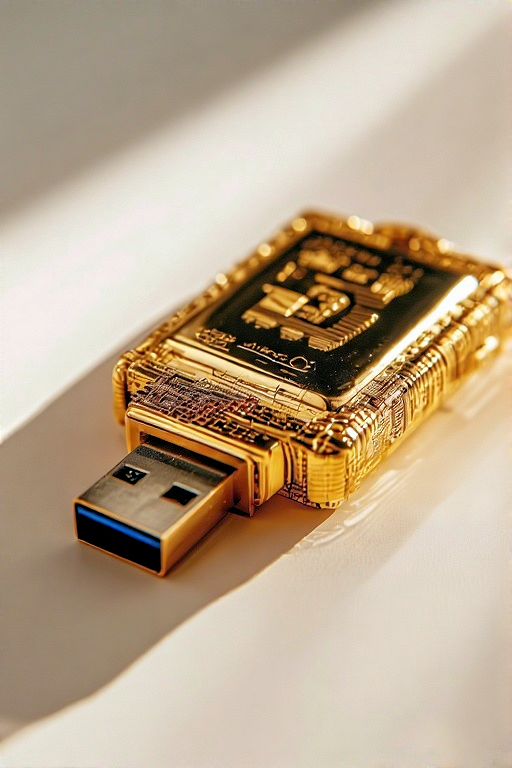
Will Bitcoin function like pocket change or bars of gold in 2140?
The Bitcoin ecosystem is still developing, making it possible that Bitcoin itself will continue to evolve over the coming decades.
However Bitcoin evolves, no new bitcoins will be released after the limit of 21 million coins is reached.
This supply limit is likely to have the most significant impact on Bitcoin miners, but it’s possible that Bitcoin investors could also experience adverse effects.
https://www.investopedia.com/tech/what-happens-bitcoin-after-21-million-mined/
________________________________________________________________________
Bitcoin Coin Of The Realm Future (Fiction or the Future?)
The year is 2040. Bitcoin, once derided as a fad, had become the bedrock of the global economy.
Governments, once suspicious, now held vast reserves.
Satoshi Nakamoto, a ghost in the machine, was a legend more myth than man.
But even in this digital utopia, the old adage held true: nothing gold can
stay.
It started subtly. A flicker on the blockchain, a momentary lag in
transaction processing.
Then, reports began trickling in from remote mining facilities in Siberia
and Iceland: strange readings of electromagnetic interference, localized
distortions in the fabric of spacetime.
The whispers grew louder, culminating in a frantic message from a geologist working on a geothermal project in El Salvador, near the dormant Conchagua volcano: “The earth is=E2=80=A6 changing. It=E2=80=99s reacting to the Bitc=oin.”
The world dismissed it as conspiracy theories until the first confirmed
case.
An old hardware wallet, buried in a backyard in rural Kentucky, was
unearthed by a bewildered homeowner.
Instead of digital codes, he found a small, exquisitely crafted ingot of
pure, 24-karat gold.
On its surface, etched with microscopic precision, was the Bitcoin logo.
Panic seized the world.
People desperately tried to access their digital wallets.
The screens flickered, the process stalled, and then, in a flash of static,
the confirmation: their Bitcoin had transmuted.
Hardware wallets were transmuted to digital gold.
Software wallets entensions were not affected.
Only the thumbdrive type of harware wallets were affected.
The implications were staggering.
The finite supply of Bitcoin, once merely a digital constraint, was now a
physical reality.
But how?
The answer was as fleeting as the creator of Bitcoin, sotoshi nakomoto.
The total amount of gold equivalent to the mined Bitcoin was spread across the globe, concentrated in the hands of early adopters, tech billionaires, and=E2=80=A6 surprisingly, a few lucky grandmothers who had forgotten about=the small investments their grandchildren had made for them.
The value of this new “Bitcoin Gold” was astronomical.
Forget the volatility of the digital currency; this was solid, tangible
wealth.
Nations teetered on the brink of collapse as their carefully managed
economies were overwhelmed by the sudden influx of decentralized, physical gold.
Governments scrambled to understand the phenomenon.
Physicists, metallurgists, and even theologians were consulted.
The leading theory, bordering on science fiction, suggested that the
concentrated energy of the Bitcoin mining process, combined with the unique cryptographic structure of the blockchain, had somehow triggered a fundamental shift in the quantum realm, allowing the digital asset to bleed into physical reality.
“The World’s Foremost Authority”, living in Reo Linda, Professor Irwin Corey was also consulted.
Society fractured.
The haves, those who had held onto their Bitcoin, regardless of the initial
skepticism, became overnight plutocrats.
The have-nots, those who had sold early or dismissed the cryptocurrency,
were left to watch in envy and resentment.
The world plunged into a second Gilded Age, amplified by the digital age.
Amidst the chaos, a small team of coders and scientists worked tirelessly
to understand the transformation.
Led by a brilliant but eccentric cryptographer named Anya Sharma, they
believed they could reverse the process, restore Bitcoin to its digital
form, and prevent the world from devolving into a gold-obsessed dystopia.
Their efforts led them back to the original source:
Nakamoto=E2=80=99s code.
They discovered a hidden subroutine, a failsafe that Nakamoto, in his
enigmatic wisdom, had built into the very foundation of Bitcoin.
It was a self-destruct mechanism, designed to prevent Bitcoin from becoming too powerful, too influential, too=E2=80=A6 real.
Anya realized that the transmutation was not an unintended consequence but a deliberate act, a failsafe triggered by some unknown condition.
Her team worked against the clock, deciphering the code, tweaking the
algorithm, attempting to override the failsafe before the last Bitcoin
turned to gold.
The final Bitcoin, held by a benevolent AI dedicated to philanthropic
causes, was locked in a secure vault beneath the Swiss Alps.
Anya and her team watched as the moment of truth approached.
The code was almost ready.
The world held its breath.
But then, a choice had to be made. Reverting the process would mean the destruction of a physical asset of immense value.
The gold could be harnessed, used to rebuild the world, to fund scientific
breakthroughs, to alleviate poverty.
Destroying it would mean unleashing a chaotic digital currency back into
the world, with no guarantee that the transmutation wouldn’t happen again.
Anya looked at the faces of her team, exhausted but resolute.
She looked at the news reports flooding the screen, stories of both
unimaginable wealth and crushing poverty.
She realized that the decision wasn’t about code or algorithms. It was
about humanity.
She made her choice.
The switch to revert was never flipped.
Instead, Anya and her team released the code that allowed for the safe and controlled sharing of the Bitcoin Gold wealth.
They created a global trust, managed by AI and independent auditors,
ensuring that the gold was used for the benefit of all.
The world didn’t return to normal. But it was never “normal” to begin with.
It couldn’t. But slowly, painstakingly, it began to heal.
The Bitcoin Gold became a symbol of both the potential and the peril of
technological innovation, a constant reminder that even the most brilliant
code can have unintended consequences, and that true wealth lies not in the digital or the physical, but in the shared prosperity and well-being of
humanity.
Bitcoin had turned to gold, and in doing so, it had taught the world a
lesson it would never forget.
Professor Irwin Corey found out that sotoshi nakomoto’s real name is captain convey.
Editor’s Note
For those of you who live in Reo Linda, as Rugh Limbaugh use to say, sotoshi isn’t some new type of suhsi.
Bitcoin is a digital currency. It has value. It can be converted to another currency such as gold in the real world.
If you own a hardware wallet that has bitcoin stored, in digital form, don’t expect it to turn to gold in 2040 unless you live in Reo Linda.
Actually you could expect the unexpected when bitcoin can’t be mined any longer and the last coin is produced, ie resolved by a bitcoin miner.
My advise is to not hold on to any bitcoin digital currency you own.
If professor Irwin Corey is correct and he knows who created bitcoin then
who do you think is talking to you now. Wink – Wink.